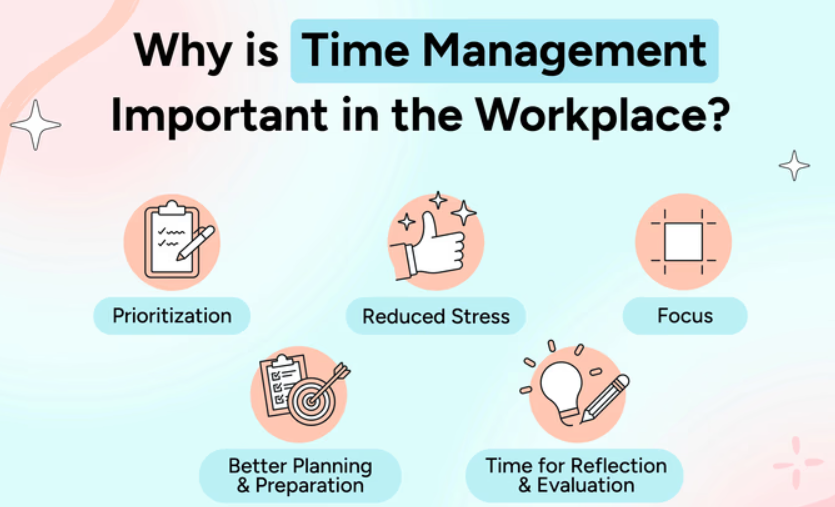
Time is one of the most valuable resources a person has, yet many struggle to use it effectively. Proper time management allows individuals to accomplish more in less time, reduce stress, and achieve personal and professional goals.
Managing time efficiently is not just about working harder—it’s about working smarter. This article explores the importance of time management, key strategies, and the benefits of mastering this essential skill.
Why Time Management Matters
Effective time management allows individuals to:
- Increase Productivity: Prioritizing tasks ensures that important work gets done efficiently.
- Reduce Stress: Knowing what to do and when prevents last-minute rushes and anxiety.
- Achieve Goals: Structured planning helps reach both short-term and long-term objectives.
- Maintain Work-Life Balance: Proper allocation of time allows for relaxation and personal activities.
- Improve Decision-Making: Better planning leads to clearer choices and fewer mistakes.
Time management is essential for achieving success in a fast-paced world where demands on attention are constant.
Common Time Management Challenges
Some common obstacles include:
- Procrastination: Delaying tasks leads to unnecessary stress and missed deadlines.
- Distractions: Social media, notifications, and interruptions reduce focus and efficiency.
- Overcommitment: Taking on too many responsibilities can overwhelm and reduce performance.
- Lack of Planning: Without a clear schedule, tasks may be forgotten or poorly executed.
Recognizing these challenges is the first step toward effective time management.
Key Time Management Strategies
1. Prioritize Tasks
- Use the Eisenhower Matrix to classify tasks as urgent, important, or less critical.
- Focus on high-priority activities first to maximize impact.
2. Set SMART Goals
- Specific, Measurable, Achievable, Relevant, and Time-bound goals help maintain clarity and focus.
3. Create a Schedule
- Plan daily, weekly, or monthly activities.
- Allocate time blocks for important tasks, breaks, and personal activities.
4. Limit Distractions
- Turn off unnecessary notifications and create a dedicated workspace.
- Use tools like website blockers during focused work periods.
5. Break Tasks into Smaller Steps
- Dividing larger projects into manageable chunks prevents overwhelm and increases motivation.
6. Use Productivity Tools
- Tools like calendars, task managers, and apps (e.g., Trello, Todoist) help track and organize tasks.
7. Delegate When Possible
- Assign tasks to others when appropriate to free time for high-priority responsibilities.
Benefits of Effective Time Management
- Increased Efficiency: More work is completed with less effort.
- Reduced Stress: A structured plan minimizes uncertainty and last-minute pressure.
- Improved Work Quality: Focusing on one task at a time enhances accuracy and output.
- Better Life Balance: More time for family, hobbies, and personal growth.
- Greater Opportunities: Being punctual and organized creates a positive impression professionally.
Daily Habits for Better Time Management
- Start the day with a clear to-do list.
- Review and adjust tasks at the end of each day.
- Allocate specific times for email and communication to avoid constant interruptions.
- Practice saying “no” to unnecessary commitments.
- Reflect regularly on time use and make improvements.
Conclusion
Time management is a crucial skill for personal and professional success. By prioritizing tasks, setting goals, limiting distractions, and maintaining a structured schedule, individuals can accomplish more with less stress.
Mastering time management improves productivity, work quality, and overall well-being. With consistent practice, it becomes easier to balance responsibilities, achieve goals, and lead a more organized and fulfilling life.