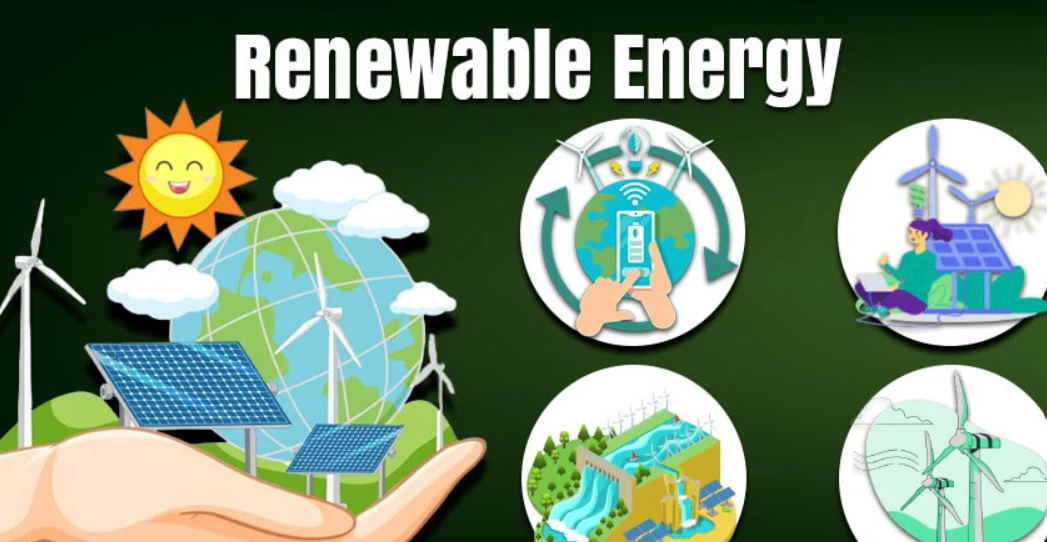
Renewable energy is energy derived from natural sources that are constantly replenished, such as sunlight, wind, water, and geothermal heat. Unlike fossil fuels, which are finite and contribute to environmental pollution, renewable energy is sustainable and environmentally friendly.
The global shift toward renewable energy is driven by the need to reduce greenhouse gas emissions, combat climate change, and ensure long-term energy security. Understanding the basics of renewable energy and its benefits is essential for both individuals and policymakers.
Types of Renewable Energy
1. Solar Energy
- Generated from sunlight using solar panels and photovoltaic cells
- Can be used for electricity, heating, and powering devices
- Advantages: Abundant, clean, and low maintenance
2. Wind Energy
- Produced by converting wind movement into electricity using wind turbines
- Suitable for both small-scale residential and large-scale commercial use
- Advantages: Renewable, no emissions, and scalable
3. Hydropower
- Electricity generated by flowing or falling water, usually via dams
- Provides consistent and reliable energy
- Advantages: Renewable, efficient, and capable of large-scale electricity production
4. Geothermal Energy
- Utilizes heat from the Earth’s core to generate electricity or provide heating
- Suitable for regions with geothermal activity
- Advantages: Low emissions, reliable, and sustainable
5. Biomass Energy
- Derived from organic materials such as plant matter, wood, and agricultural waste
- Can be converted into electricity, heat, or biofuels
- Advantages: Reduces waste, renewable, and versatile
Benefits of Renewable Energy
1. Environmental Protection
Renewable energy reduces reliance on fossil fuels, decreasing greenhouse gas emissions and air pollution. This helps combat climate change and protects ecosystems.
2. Sustainable and Infinite
Unlike coal, oil, and natural gas, renewable energy sources are abundant and naturally replenished. They provide a long-term solution for energy needs.
3. Economic Growth
Investing in renewable energy creates jobs in manufacturing, installation, and maintenance. It also encourages technological innovation and energy independence.
4. Energy Security
Relying on renewable energy reduces dependence on imported fossil fuels and stabilizes energy prices.
5. Health Benefits
Reduced pollution from fossil fuels leads to cleaner air and water, lowering the risk of respiratory and cardiovascular diseases.
Challenges of Renewable Energy
While renewable energy offers numerous advantages, there are challenges to consider:
- Intermittency: Solar and wind energy depend on weather conditions, which can be unpredictable.
- High Initial Costs: Installation of renewable energy systems can be expensive, though costs are decreasing over time.
- Storage Issues: Efficient energy storage solutions are needed to manage surplus energy and ensure consistent supply.
- Infrastructure Needs: Transitioning to renewable energy requires investment in grids and transmission systems.
Addressing these challenges requires innovation, government support, and public awareness.
How Individuals Can Contribute
- Install solar panels on rooftops to reduce electricity bills and carbon footprint
- Use energy-efficient appliances and lighting
- Support clean energy policies and companies using renewable sources
- Reduce energy consumption through smart habits like turning off lights and unplugging devices
Small actions at the individual level collectively contribute to a cleaner, sustainable environment.
The Future of Renewable Energy
The renewable energy sector continues to grow rapidly. Innovations in solar efficiency, battery storage, wind turbine technology, and smart grids are making renewable energy more reliable and cost-effective.
Transitioning to a renewable energy-based economy is vital to achieving global sustainability goals and combating climate change. By investing in and adopting renewable energy, societies can ensure a healthier planet for future generations.
Conclusion
Renewable energy is a cornerstone of sustainable development. It provides a clean, inexhaustible, and environmentally friendly alternative to fossil fuels. By understanding its types, benefits, and challenges, individuals and governments can make informed decisions to promote a greener future.
Adopting renewable energy technologies not only reduces environmental impact but also fosters economic growth, energy security, and public health. The shift toward renewable energy is essential for a sustainable and prosperous world.